
 English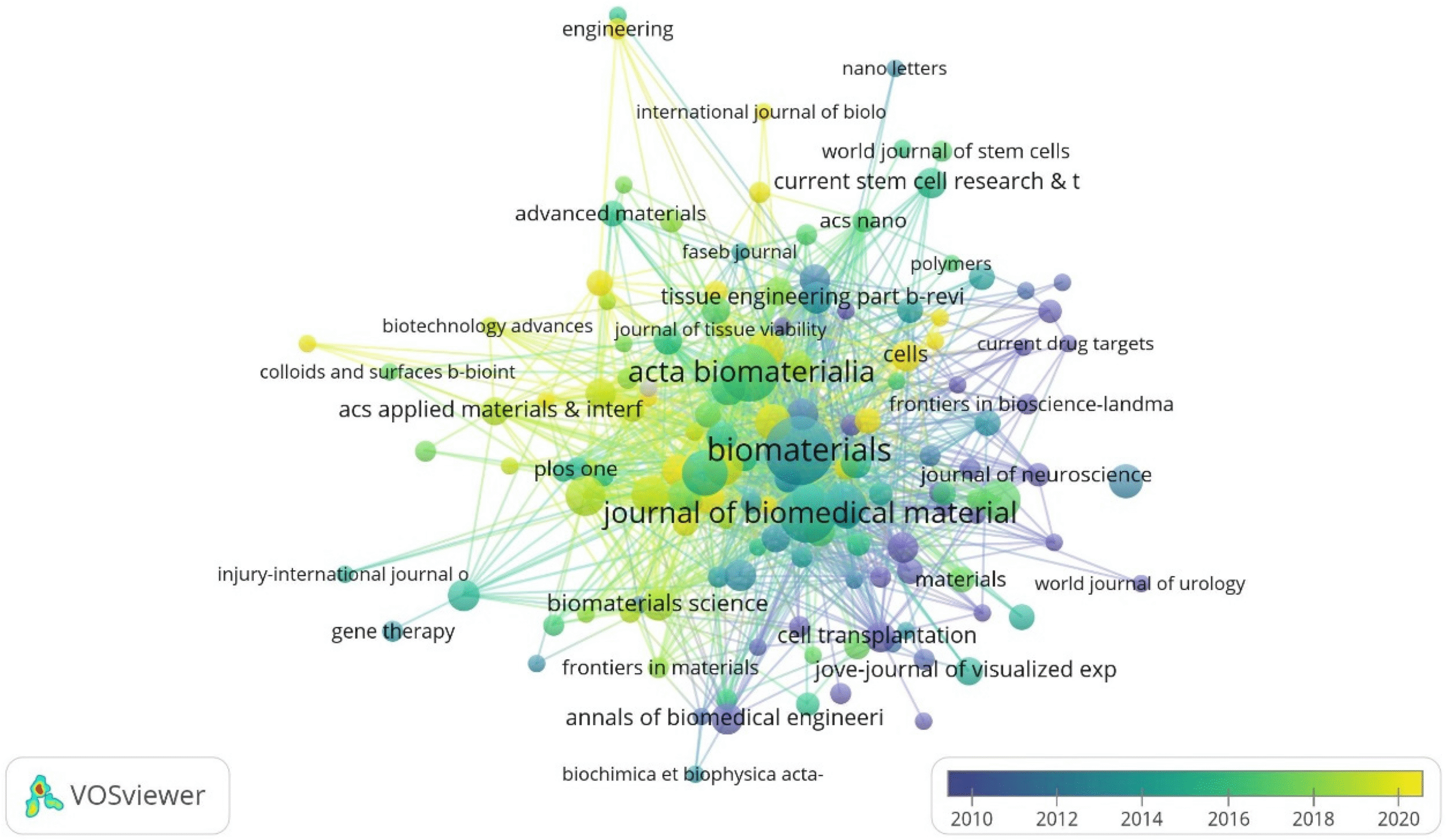
🧠 Mapping 25 Years of Spinal Cord Tissue Engineering
Over the last two decades, the field of spinal cord injury (SCI) repair using scaffolds has seen rapid growth and global collaboration. A recent bibliometric study analyzed over 1,500 articles from 2000 to 2025 to uncover trends, top contributors, and future directions in this critical area of neuroscience and regenerative medicine.
🚀 Rising Global Interest
SCI repair has evolved from small-scale lab experiments to an expansive field with worldwide interest. The number of publications surged until 2019 and then stabilized, showing the field’s maturity. The U.S., China, and Canada are among the most productive countries, with institutions like Northwestern University and University of Toronto leading in both quantity and influence.
🧪 Journals & Researchers to Watch
The most impactful research is published in top-tier journals such as Biomaterials and Acta Biomaterialia. Standout researchers like Stephanie Willerth, Lonnie Shea, and Yuan‑shan Zeng are helping shape the field through work on biomaterials, neural regeneration, and stem cell integration.
🔬 Hot Topics: Hydrogels, Stem Cells, and Beyond
Keyword analysis reveals recurring themes like axonal regeneration, functional recovery, and stem cell therapy. A major emerging trend is the use of hydrogels—biocompatible materials often combined with stem cells or gene-edited cells—to mimic the natural spinal environment and support healing.
🌍 A Global Collaboration Effort
One striking trend is the growing collaboration between North American and Asian institutions. This suggests that solving complex neurological challenges now requires cross-border, interdisciplinary teamwork and shared innovation.
🔭 Where the Field Is Headed
Future SCI scaffold strategies will likely rely on multifunctional, biomimetic materials that combine cells, bioactive molecules, and smart design. As more labs pursue clinical applications, the gap between research and real-world treatments is steadily narrowing.
📖 Full Article: https://www.ncbi.nlm.nih.gov/pmc/articles/PMC12025192/

No comment